
Forgive me if this column reads like I nodded off while writing it. For I am only trying to prove a point. To be honest, I took a power napping break mid-sentence.
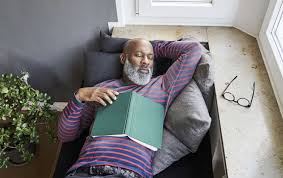
For me napping, specifically POWER napping, has never been difficult. I don’t even need to lie down to achieve slumber. I’ve rested my chin on my chest in crowded subway cars, in middle seats on airplanes, during kids’ sporting events and with my feet on my desk while my computer monitor also goes into sleep mode. Note: The latter is frowned upon if you are not self employed.
I drift off for between five to seven minutes — yes, you read that right — and awake feeling refreshed and ready for whatever the remaining day holds. I don’t feel completely asleep. Never have I missed the “We are ready to begin boarding” announcement if napping at an airport gate — but I’m blissfully unaware of the chaos surrounding me.
For me, naps counteract chaos, which is why I feel a siesta, a snooze, some shut-eye, or whatever you choose to call it, needs to become part of this country’s culture before we go further off the rails.
From Barcelona to Vietnam: A Global Tour of Power Napping
It’s been widely reported that the siesta is declining in Spain, the country that most embraced it until recently. True, I didn’t see a lot of closed businesses while strolling in Barcelona last year, but chalk that up to the city’s booming tourism trade. It’s hard to lock your shop when there are constantly hordes of visitors outside, eager to buy leather goods, ceramics and any cooking ingredient they think will make their paella actually taste like paella.
Other countries I recently visited aren’t letting go of sleep that easily. In Can Tho, Vietnam, I walked into a small grocery, desperate for a soda, a bottle of water or anything to curtail mid afternoon humidity. The store was divided into two sections, separated by a half wall. Upon entering I saw no employees. It was as if the store owner said, “Take what you want.”
I’m too honest to even consider committing such an infraction, so I ventured to the store’s other half, cold water bottle in one hand and money in the other. Sandwiched between the store’s merchandise was a small table. On it rested an older woman, curled into a fetal position. No mattress, blanket or pillow. Just her.
Sensing my presence she bounded to her feet and collected my money. She spoke no English but she also lacked the surliness that often accompanies someone who is startled awake. Instead, she thanked me via a smile and a bow.
A month later, after a morning spent walking through Buenos Aires, Argentina, I yearned for an afternoon caffeine fix. Walking down tree-lined streets, I passed three coffee shops, all shuttered but clearly not out of business. I spied a vacant plastic chair outside the last shop. Rather than continue my search, I sat on the chair, assumed my power napping position and power napped. I could sense both cars and pedestrians passing me, but nobody asked for money, or attempted to take my backpack. Furthermore, n one exhibited the behavior that usually prevents me from power napping on a street in Chicago. my current home
CEOs and Politicians…Go to Sleep Now
So, America, can we at least give it a try? Politicians, let’s start with you. We’ve all seen photos of President Trump dozing in Cabinet meetings, even while his subordinates wax poetically about his leadership abilities. Congress, follow his lead. Lock your office doors, put your feet on your oak or walnut desks and promise to resume discussions on TSA funding and Strait of Hormuz ownership “in a few hours.”
CEOs, even if you have reinstituted a “return to the office” policy, make napping a part of every workday. Trust me, it will be a bigger hit than “Breakroom Donut Day.”
I have other ideas, but they will have to wait. At least for five to seven minutes.